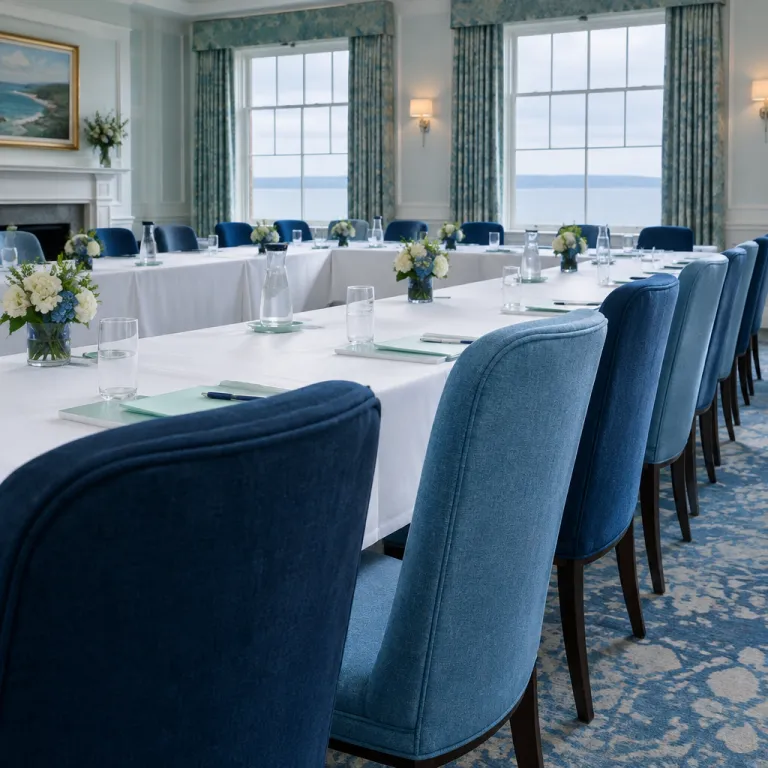
From venue profile to narrative canvas for meetings and events
The way you frame The Dower House Hotel’s meeting and event capacities will determine how B2B audiences perceive the entire property and its positioning. When you present this Woodhall Spa country house hotel as offering five flexible function rooms and a maximum capacity of 200 guests, you give creators a concrete narrative scale for conferences, weddings, and private celebrations. That simple data point about maximum numbers becomes the anchor for every story about the venue, from an intimate civil ceremony in one room to large multi-room events using several spaces at once.
For travel influencers and communications agencies, the venue profile is never just a list of rooms and layouts; it is the backbone of a content strategy that connects the hotel to specific audiences, from corporate board meetings to destination weddings. When you describe The Dower House as a house hotel with 21 bedrooms, a spa culture in the surrounding village, and landscaped grounds that can host an outdoor ceremony or a wedding breakfast, you are already scripting the storyboard for video, carousels, and long-form posts. Each meeting room, each event suite, and each licensed civil ceremony area becomes a chapter in a larger hospitality storytelling arc that runs from start to finish of the guest journey.
Creators who specialise in meetings and events should treat the Dower narrative as modular content, where one room can be framed as ideal for strategy days while another suits hybrid events with AV equipment and wireless internet. The same physical house can host a boardroom-style event for around 80 people one day and a theatre-style conference for up to 200 the next day, and that operational flexibility is pure storytelling gold for social platforms that reward episodic content. When you align the hotel’s room capacities with clear use cases such as private events, civil ceremony formats, or residential meetings, you help brands and agencies craft stories that feel both aspirational and operationally credible.
Designing hospitality storytelling around capacities, layouts, and guest flow
High-impact hospitality storytelling starts with a precise understanding of room capacities, seating layouts, and guest flow across suites, corridors, and outdoor spaces. At The Dower House Hotel, the maximum capacity of 200 people in theatre style, around 80 in a boardroom configuration, and approximately 120 for a banquet-style wedding breakfast gives creators a clear framework to script events from arrival to the last dance-floor moment. When you translate those numbers into visual narratives, you help audiences picture how guests move from a licensed civil ceremony in one room to a private bar reception and finally to a seated dinner.
For B2B content, you can structure a story around how meeting rooms evolve during the day: a morning meeting with 40 guests in a boardroom layout, an afternoon breakout event in smaller rooms, and an evening networking reception in the main suite with a private bar and live music. Each transition becomes a content beat, from the first coffee service and food presentation to the final toast, and the hotel’s capacity data underpins every scene. When you compare this approach with other properties, you can reference resources such as a guide on how many meeting rooms another conference hotel offers for high-impact hospitality storytelling, then position The Dower House as a more intimate yet still scalable venue.
Influence-driven narratives should also highlight operational details that matter to planners, such as whether the venue is wheelchair accessible, how the event spaces connect to outdoor terraces, and how the house hotel team manages start-to-finish timelines. When you show how a civil ceremony for 60 guests can seamlessly expand into an evening event with a dance floor and a private bar for 120, you turn abstract capacity figures into tangible guest experiences. That is where the hotel’s meeting and event specifications stop being a technical checklist and become a persuasive story element for both corporate meetings and romantic weddings.
Aligning creator formats with meeting spaces and event objectives
Different creator formats map naturally onto different meeting spaces, capacities, and event objectives within the house. Short-form video works beautifully for the emotional peaks of a Dower House wedding celebration, such as the civil ceremony entrance, the first dance on the dance floor, or the moment guests enter the room for the wedding breakfast. Long-form B2B content, by contrast, should focus on how the hotel’s event facilities support complex programmes, from multi-room conferences to board meetings with high-spec AV requirements.
When agencies and hotel brands brief creators, they should connect each content format to a specific event space and capacity scenario: a 15-second reel showing the transformation of a meeting room from daytime board meetings to an evening private reception, or a carousel that walks planners through different layout options for 50, 100, and 200 guests. This is also the right moment to integrate educational content about influence-driven revenue, using resources such as an analysis on how to evaluate the real cost of a hotel website with an integrated booking engine for influence-driven hospitality storytelling. By linking The Dower House Hotel’s event capacities to booking flows, you show how content creation directly impacts conversion.
For travel influencers, the narrative can shift from pure meetings to the full house experience, including a visit to Woodhall Spa village, behind-the-scenes food preparation in the hotel kitchen, and quiet moments in guest rooms between sessions. Each piece of content should reference the scale of the event, whether it is a 20-person strategy day in one meeting room or a 200-delegate conference using all event spaces, so audiences understand the venue’s maximum capacity. That explicit link between format, room, and numbers helps social platforms surface your content to planners searching for specific meeting venues and event space solutions.
Storytelling the guest journey from civil ceremony to private bar finale
Weddings and social events at a country house hotel like The Dower House offer a naturally cinematic structure for creators. The guest journey usually starts with arrival at the house, continues with a licensed civil ceremony in a dedicated room or garden area, and flows into a drinks reception before the wedding breakfast and evening party. Each stage uses a different combination of event spaces, and the hotel’s capacity limits determine how many guests can be present at every moment.
For B2B content, you can break this journey into clear chapters: pre-event planning calls where couples discuss room layouts and menu options, the civil ceremony itself with close family, the transition to a larger room for the wedding breakfast, and finally the opening of the dance floor and private bar for all evening guests. Storytelling should highlight how the Dower team manages timings from start to finish, ensuring that food service, speeches, and entertainment align with the maximum capacity of each room. When you show how the same house can host small weddings of 40 guests and larger weddings of 120 guests without compromising intimacy, you give planners confidence in the venue’s flexibility.
Creators should also address practical questions that couples and planners ask, such as whether the main event space is wheelchair accessible, how many rooms are available for overnight guests, and how the spa and local attractions in Woodhall Spa can extend the wedding day into a full weekend. By weaving these details into narrative content, you transform operational facts about meeting rooms and event spaces into emotionally resonant scenes. That is how The Dower House Hotel’s capacities become a storytelling device that connects logistics, emotion, and brand positioning for both weddings and corporate events.
Using meetings and boardrooms to build B2B influence and authority
Corporate meetings, conferences, and board meetings at The Dower House Hotel provide a powerful stage for B2B influence narratives. The venue’s five meeting rooms, supported by AV equipment and wireless internet, allow brands to host strategy days, training sessions, and product launches for groups ranging from 10 to 200 guests. When creators emphasise how the hotel’s meeting facilities support both small executive retreats and large plenary sessions, they position the house as a versatile venue for serious business.
Communications agencies can craft case-study-style content that follows a corporate event from planning to execution: initial site visit to review room capacities, selection of specific spaces for plenary and breakout sessions, and coordination of food service and private bar options for evening networking. One paragraph might detail how a boardroom configuration for 80 delegates in the main room transitions into smaller rooms for workshops, while another shows how the maximum capacity of 200 in theatre style enables a keynote session. These narratives should highlight operational strengths such as flexible event spaces, licensed civil ceremony options for incentive weddings, and the ability to host private events that blend business and leisure.
When you talk about influence and authority, you can also reference how many meeting rooms and capacities matter to planners comparing venues across regions. In this context, the verified information that “How many meeting rooms does Dower House Hotel have? Five meeting / breakout rooms”, “What is their maximum event capacity? Up to 200 people in theatre style”, and “What is their boardroom capacity? About 80 people” becomes a trust signal that underpins your storytelling. By grounding your content in such precise data, ideally confirmed against the hotel’s official brochure or website, you help social platforms and search engines recognise The Dower House Hotel’s event profile as a reliable benchmark for B2B planning.
Social amplification strategies from start to finish of the event lifecycle
Social amplification in hospitality works best when it mirrors the real lifecycle of an event, from the first enquiry to the final guest departure. For The Dower House Hotel, that lifecycle includes early-stage content about the house profile and venue capacities, mid-funnel storytelling about specific meetings, events, or weddings, and post-event highlights that showcase guest satisfaction and food experiences. At every stage, the hotel’s room numbers and layouts provide context that helps audiences understand whether they are looking at a 30-person workshop or a 200-delegate conference.
Creators and agencies should design content calendars that align with key milestones: announcement posts when a new corporate event is confirmed, behind-the-scenes stories during room setup, live coverage of the civil ceremony or keynote, and recap posts that show the dance floor, private bar atmosphere, and final room layouts. This approach allows you to repurpose the same event spaces across multiple content formats, from static images of meeting rooms in boardroom style to reels showing the transformation into evening private events. For deeper-funnel amplification, you can integrate insights from analyses such as why guest-shot reels often outperform paid creator content in the hospitality funnel, then encourage guests to share their own perspectives on the house hotel and its venues.
Social platforms reward content that feels both specific and repeatable, so you should build recurring series around themes like “room of the week”, “wedding day timeline”, or “board meetings behind the scenes”. Each episode can highlight a different capacity scenario, such as a small civil ceremony in one room, a mid-size training day using two meeting spaces, or a full-house takeover event that reaches the maximum capacity of 200 guests. Over time, this structured amplification turns The Dower House Hotel’s meeting and event capacities into a recognisable narrative asset that reinforces the venue’s authority in both the meetings and weddings markets.
Key figures for dower house hotel meeting and event capacities
- The Dower House Hotel in Woodhall Spa offers five dedicated meeting rooms, which allows planners to run simultaneous breakout sessions alongside a main event without leaving the house.
- The maximum capacity reaches 200 people in theatre style, a scale that positions the venue competitively for regional conferences while still feeling like an intimate country house hotel.
- Boardroom-style layouts can accommodate around 80 delegates, which suits leadership retreats, training days, and high-level board meetings that require focused discussion.
- Banquet-style setups can host approximately 120 guests, making the venue well suited for weddings, gala dinners, and corporate celebrations that include a seated wedding breakfast.
- The property includes 21 bedrooms, enabling residential meetings and events where guests stay on site from start to finish and experience the full house and spa destination over several days.
FAQ about dower house hotel meeting spaces capacity and storytelling
How many meeting rooms does The Dower House Hotel offer for events?
The Dower House Hotel provides five meeting and breakout rooms, which can be configured for board meetings, training sessions, or small private events. This number of rooms allows planners to combine a main plenary room with several smaller spaces for workshops or confidential discussions. For creators, each room represents a distinct storytelling setting with its own layout options and visual identity.
What is the maximum capacity for a single event at the venue?
The maximum capacity for a single event at The Dower House Hotel is 200 guests in a theatre-style layout. This figure applies when the largest event space is used in its most efficient configuration for presentations or ceremonies. For weddings or banquet-style events, capacities are lower, around 120 guests, which still supports substantial celebrations with a dance floor and private bar.
How suitable is the venue for board meetings and corporate retreats?
The venue is well suited to board meetings and corporate retreats because one of the main rooms can host around 80 delegates in a boardroom-style layout. Smaller rooms can be used for breakout discussions, interviews, or confidential sessions during the day. This flexibility allows agencies and brands to design multi-day programmes that move guests between different meeting spaces without leaving the house hotel environment.
Can The Dower House Hotel host both weddings and business events effectively?
The Dower House Hotel is designed to accommodate both weddings and business events by using its event spaces in different configurations. Licensed civil ceremony areas, banquet rooms for the wedding breakfast, and evening spaces with a dance floor can be repurposed for conferences, gala dinners, or private events. Creators can highlight how the same room supports a romantic ceremony one day and a high-impact corporate event the next day, always within the limits of the venue’s maximum capacity.
What accessibility and guest comfort features matter for storytelling?
Accessibility and comfort details such as wheelchair-accessible entrances, clear signage between rooms, and comfortable seating are essential for both planners and guests. When creators show how guests move easily from the civil ceremony space to the private bar or from meeting rooms to bedrooms, they reassure audiences about the practical side of the venue. These elements, combined with accurate information about room layouts and capacities, strengthen the credibility of any hospitality storytelling about The Dower House Hotel.
Trusted references for further data and best practices
MeetingsClub; Visit Lincolnshire tourism board; UK Hospitality.