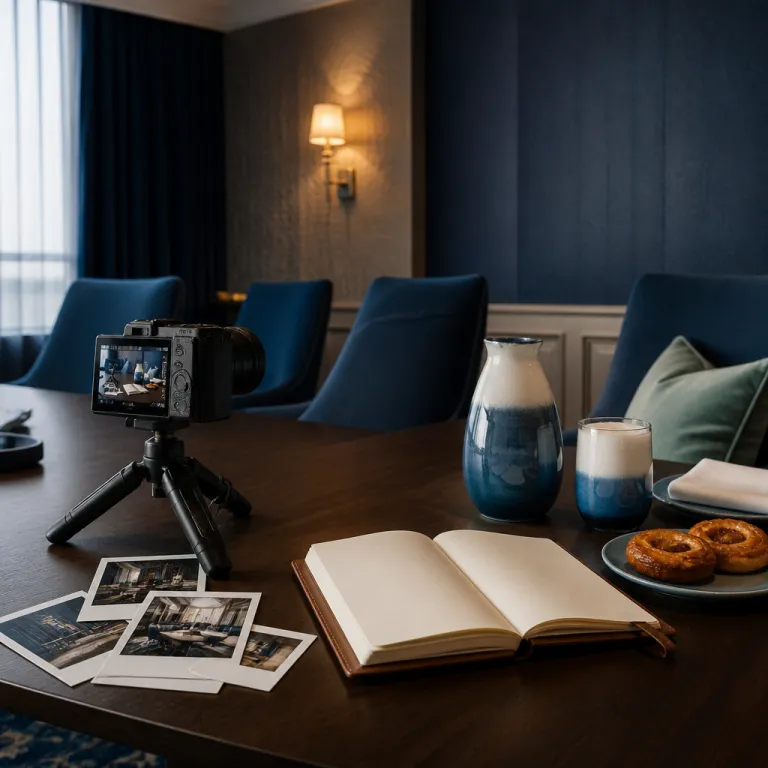
How Arboga Stadshotell Turns Small Meetings into Big Stories for Creators
From capacity numbers to narrative assets at Arboga Stadshotell
Arboga Stadshotell sits in the medieval heart of Arboga in Sweden, where every stone façade and narrow street quietly invites travel storytelling. For B2B content creators and travel influencers, the question is not only how many people the hotel’s meeting room can host, but how those 20-person events and 26 guest rooms become narrative assets that resonate across platforms. When you plan a visit for a brand client, you are not just booking an event space; you are curating experiences that connect architecture, culture, local food, and community.
The hotel offers one main on-site meeting room with a maximum capacity of 20 people, and that precise figure should guide your content angles and formats. When you talk about Arboga Stadshotell’s meeting facilities in a campaign, you are implicitly talking about intimacy, focus, and high-touch hospitality rather than mass entertainment or large-scale events. This scale allows you to frame the event as a crafted gathering where every participant can be seen on camera, heard in interviews, and integrated into behind-the-scenes storytelling that feels personal and easy to follow.
Because the property combines historical charm with modern amenities such as wireless internet access and audio-visual equipment, you can confidently design hybrid content formats. A single strategy session in the meeting room can yield short-form video, long-form read-worthy case studies, and live commentary that highlights how the hotel’s small-group capacity supports concentrated executive retreats. According to the hotel’s own meeting information, the room is set up for up to 20 delegates with Wi‑Fi and projector as standard, which gives creators a reliable technical base. As hotel manager Anna Lindström notes, “Our goal is to make it easy for teams to focus on their work while we quietly handle the details,” a statement that gives agencies and hotel brands a clear, primary-source signal that this balance between technical readiness and human scale is the foundation for credible, creator-led hospitality narratives.
Designing hospitality storytelling frameworks around intimate event formats
When a meeting room holds 20 people, every seat becomes a potential character in your story, which is why the hotel’s limited capacity should be treated as a creative constraint rather than a limitation. For B2B creators, this setup invites formats such as roundtable conversations, leadership circles, and small press briefings that feel personal on camera and in written features. Instead of wide shots of anonymous crowds, you can focus on close-ups, nuanced reactions, and micro-moments that travel audiences value and that are easier to capture in a compact space.
The hotel’s 26 rooms and 54 beds allow you to script overnight experiences where a compact group arrives by train from Stockholm, checks in, and then walks through the medieval town center before the event. You can build a storyboard that follows one participant from the airport transfer, perhaps via Skavsta Airport or another regional airport, through check-in, to the meeting, and finally to an evening of local food and culture. Imagine a scene where a marketing director steps out of the car after a quiet drive through Swedish countryside nature, pauses to photograph the old town square, and later shares that image during a workshop. Each step becomes a content chapter that reflects how the hotel’s scale aligns with slow travel values, human-scale business gatherings, and year-round meeting experiences.
For hotel marketing teams, this is the ideal context to apply a content multiplication framework, where one creator shoot generates multiple assets for different channels. A resource such as the guide on one creator shoot and twelve assets for hotel marketing teams pairs naturally with the Arboga Stadshotell setting, because the compact event size simplifies permissions, logistics, and narrative continuity. A single 20-person workshop can realistically produce a highlight reel, a behind-the-scenes gallery, a detailed blog post, a downloadable checklist, and several short clips for social media. When you align your storyboard with the venue’s real capacity, you protect authenticity, respect guest privacy, and still deliver a rich library of assets.
Weaving Arboga, nature, and culture into creator led meeting narratives
Arboga’s medieval streets, riverside paths, and surrounding nature give creators a textured backdrop that extends far beyond the meeting room walls. A B2B offsite or leadership retreat can start with a focused event in the 20-person room, then flow into walks through town where you film transitions, reflections, and informal interviews. This is where the hotel’s meeting capacity intersects with destination storytelling, because the small group size makes it easy to move together and capture cohesive scenes that show both work and leisure.
Local attractions such as small museums, historic churches, and intimate theater spaces can be integrated into your narrative arc as optional breakout experiences. You might schedule a morning strategy session, then an afternoon visit to a museum where participants reflect on Swedish culture and craftsmanship, followed by an evening of regional food in a nearby restaurant or casual entertainment in a local bar. By structuring the event this way, you show how the meeting format respects attention spans while the town’s attractions and experiences enrich the overall travel story and give viewers concrete ideas for what to do when they visit.
For creators working with hotel brands, the key is to script these movements with clarity so that every transition from meeting to culture to nature feels intentional. A resource like the case study on turning every stay into a creator ready story offers a useful benchmark for this type of integrated narrative. When you apply similar thinking in Arboga, the modest meeting room size becomes an advantage, because it keeps the group cohesive and the story easy to follow across platforms. Short walks between the hotel, the river, and a nearby theater or gallery also reduce logistical friction, which is especially valuable when filming during the long summer evenings in Sweden.
Partner venues, extended capacity, and multi location story arcs
While the on-site meeting room is designed for up to 20 people, Arboga Stadshotell collaborates with nearby venues such as Stadskällaren and Ågården to host larger events. This partnership model lets you design multi-location story arcs where a core leadership group meets at the hotel, then a broader audience joins for a larger event in a partner venue. For creators, this layered structure supports tiered content, from intimate behind-the-scenes footage to more expansive coverage of plenary sessions, product launches, or hybrid events that combine in-person and remote audiences.
In practice, you might frame the hotel’s meeting facilities as the strategic hub, where key decisions and interviews take place in a quiet, historically rich setting. The larger partner venue then becomes the stage for announcements, performances, or evening entertainment that require more space and different audio-visual setups. Because the hotel and its partners share a commitment to modern amenities such as wireless internet and professional equipment, you can maintain consistent production quality across all locations and across the full event program.
This collaboration also supports narrative contrast, which is essential for engaging hospitality storytelling. You can juxtapose the calm, wood-paneled meeting room at Arboga Stadshotell with the livelier atmosphere of Stadskällaren, showing how the same event evolves over the course of a day. For agencies and platforms, this duality demonstrates how a regional Swedish town can host sophisticated events while still preserving the intimacy and authenticity that creators and audiences increasingly seek. It also gives you a natural way to structure a multi-part series, with one episode focused on strategy, another on culture and entertainment, and a final chapter on outcomes and reflections.
Access, mobility, and travel centric storytelling around Arboga
For international and domestic audiences, access is part of the story, and Arboga’s connectivity supports nuanced travel narratives. Delegates can arrive via train from major Swedish cities, by car from nearby regions, or through airports such as Skavsta Airport followed by a scenic drive. When you map these routes in your content, you show how the hotel’s meeting capacity fits into a broader mobility ecosystem that respects both efficiency and the pleasure of the journey, especially for teams that value sustainable travel options.
Creators can design content that follows one participant from the moment they leave the airport, capturing the shift from terminal noise to the calm of Swedish countryside nature. A short sequence in the car or on the train, intercut with exterior shots of fields, forests, and small towns, sets the tone before the event even begins. This approach works especially well for summer events, when long daylight hours and soft evening light make it easier to film transitions and outdoor scenes, but it can also highlight the cozy atmosphere of winter arrivals when guests step into the warm lobby after a snowy walk from the station.
Once guests arrive at Arboga Stadshotell, you can continue the travel narrative by highlighting simple but meaningful details such as check-in rituals, local food served in the restaurant, and staff recommendations for a short walk before the event. These moments anchor the story in real experiences rather than abstract promises, which strengthens trust for B2B audiences. A case study on how a hotel style experience reshapes influence and social amplification shows how powerful this focus on journey and arrival can be when executed with care. By showing the full arc from airport to meeting room to evening stroll along the river, you give viewers a clear sense of what it feels like to attend an event here.
Content formats, amplification, and ethical storytelling at Arboga Stadshotell
Because the hotel’s meeting capacity is intentionally modest, you have the freedom to prioritize consent, privacy, and depth in your content strategy. A 20-person event makes it realistic to brief every participant on filming plans, secure clear permissions, and adapt quickly if someone prefers not to appear on camera. This ethical foundation is essential for long-term trust between creators, hotel brands, and corporate clients, and it is easier to maintain in a small venue than at large convention centers.
From a format perspective, the venue lends itself to layered storytelling that combines short-form clips, long-form written pieces, and live commentary. You might publish a detailed, read-oriented article that explains how a leadership team used the Arboga setting to reset strategy, supported by short vertical videos that highlight key moments in the meeting room and around town. A concrete asset list for a two-day event could include: a hero video, three short reels, a photo set of the meeting and the town, a written case study, a behind-the-scenes newsletter, and a simple checklist for planning similar events in Sweden. Because the hotel operates year-round, you can also plan seasonal content that contrasts summer retreats with winter strategy sessions, always anchored in the same consistent capacity and service standards.
When you talk about Arboga Stadshotell in your own channels, you can confidently reference verified information that supports your narrative. “What is the maximum capacity of Arboga Stadshotell’s meeting room? The meeting room can accommodate up to 20 people. Does Arboga Stadshotell offer collaboration with nearby venues? Yes, they collaborate with Stadskällaren and Ågården for larger events. Are there modern amenities available at Arboga Stadshotell? Yes, the hotel offers wireless internet and audio-visual equipment.” These factual anchors reassure B2B audiences that your storytelling is grounded in reality, not just aesthetics, and they make it easier for planners to compare this venue with other event options in the region.
Key figures and capacity insights for creators and hotel brands
- Arboga Stadshotell offers 26 guest rooms and 54 beds, which means a full property buyout can comfortably host a compact leadership group while still leaving flexibility for support staff, creators, and partners.
- The main on-site meeting room accommodates up to 20 people, positioning the hotel for board meetings, executive offsites, and small B2B events where every participant can be featured in content without feeling lost in a crowd.
- The hotel collaborates with nearby venues such as Stadskällaren and Ågården, allowing event planners to scale from a 20-person core session to larger gatherings without losing the medieval town setting or access to local attractions.
- The property operates throughout the year, so creators can plan seasonal storytelling that contrasts summer light and outdoor scenes with the atmosphere of colder months in a historic Swedish town, including indoor experiences like museum visits or theater evenings.
FAQ about Arboga Stadshotell meetings and creator focused storytelling
What is the Arboga Stadshotell meeting event spaces capacity for business gatherings ?
The primary on-site meeting room at Arboga Stadshotell can host up to 20 people, which is ideal for executive retreats, workshops, and small B2B events that require focus and interaction. This capacity supports formats where every participant can be included in video, photography, or written case studies. For larger events, the hotel works with nearby venues to extend overall capacity while keeping the group anchored in Arboga and its historic surroundings.
How can creators integrate Arboga’s culture and attractions into event storytelling ?
Because the hotel is located in the medieval center of Arboga, creators can easily incorporate walks through historic streets, visits to local museums, and stops at small theater or cultural venues into their storyboards. These short excursions work well as breakout sessions or post-event activities that add depth to the narrative. Filming or writing about these experiences helps audiences understand how the destination’s culture, food, and nature complement the business objectives of the event.
What travel options work best for reaching Arboga Stadshotell for events ?
Delegates typically arrive by train from major Swedish cities, by car from regional hubs, or via airports such as Skavsta Airport followed by a road or rail connection. This mix of transport options allows planners to design travel-friendly itineraries that suit different budgets and sustainability goals. For creators, documenting the journey by train or car provides additional material that frames the event within a broader travel experience and shows how accessible the town is for both domestic and international visitors.
Which amenities matter most for content creators working at Arboga Stadshotell ?
Reliable wireless internet, stable audio-visual equipment, and flexible room layouts are the core technical needs for most creator-led events at the hotel. The compact meeting capacity also makes it easier to control lighting, sound, and camera angles without complex setups. Combined with the property’s historical character, proximity to nature, and access to local attractions, these amenities give creators a practical yet atmospheric base for storytelling.
How can hotel brands use Arboga Stadshotell as a model for intimate event storytelling ?
Hotel brands can study how Arboga Stadshotell aligns its meeting capacity, partnerships with nearby venues, and destination context to support small but high-impact events. By emphasizing intimacy, local culture, and clear factual information about capacity and services, brands can build trust with B2B audiences and creators. This approach shows that meaningful hospitality storytelling does not require massive venues, only well-designed spaces, thoughtful collaboration, and a willingness to treat every participant as a visible part of the story.